A new client connection is more than a notification. It is the beginning of a possible relationship with someone who is looking for support, clarity, and guidance on their wellness journey.
The way you respond in those first few moments can help a client feel seen, respected, and confident about taking the next step. Thoughtful communication does not need to be complicated. It starts with reviewing their information carefully, responding with warmth, and setting clear expectations from the beginning.
Preparing for new connections
Before responding to a new connection, take a moment to pause and review the request with intention. Clients often share personal details about what they are experiencing, what they are hoping for, or what kind of support they are exploring.
A thoughtful response begins before you write the first message. Consider whether the client's goals align with your areas of focus, whether your availability matches their needs, and whether you feel equipped to support the conversation in a professional and helpful way.
- Review the client's wellness focus and stated goals
- Notice any preferences they shared
- Consider whether your services are a strong fit
- Check your availability before moving the conversation forward
Review client information thoughtfully
Client information is meant to help you understand the person behind the request. Instead of treating the details as a checklist, use them as context for a more personal and respectful conversation.
Look for clues about what matters most to the client. They may be looking for education, emotional support, lifestyle guidance, accountability, or help understanding what options are available. Your role is not to assume what they need, but to meet the conversation with curiosity and care.
When appropriate, reflect back what you noticed. A simple sentence such as, “I saw that you are looking for support with stress and daily routines,” can help the client feel that their request was actually read.
Making a great first impression
Your first message sets the tone. It does not need to be long, but it should feel warm, clear, and specific to the client. Avoid sending a message that feels generic or rushed.
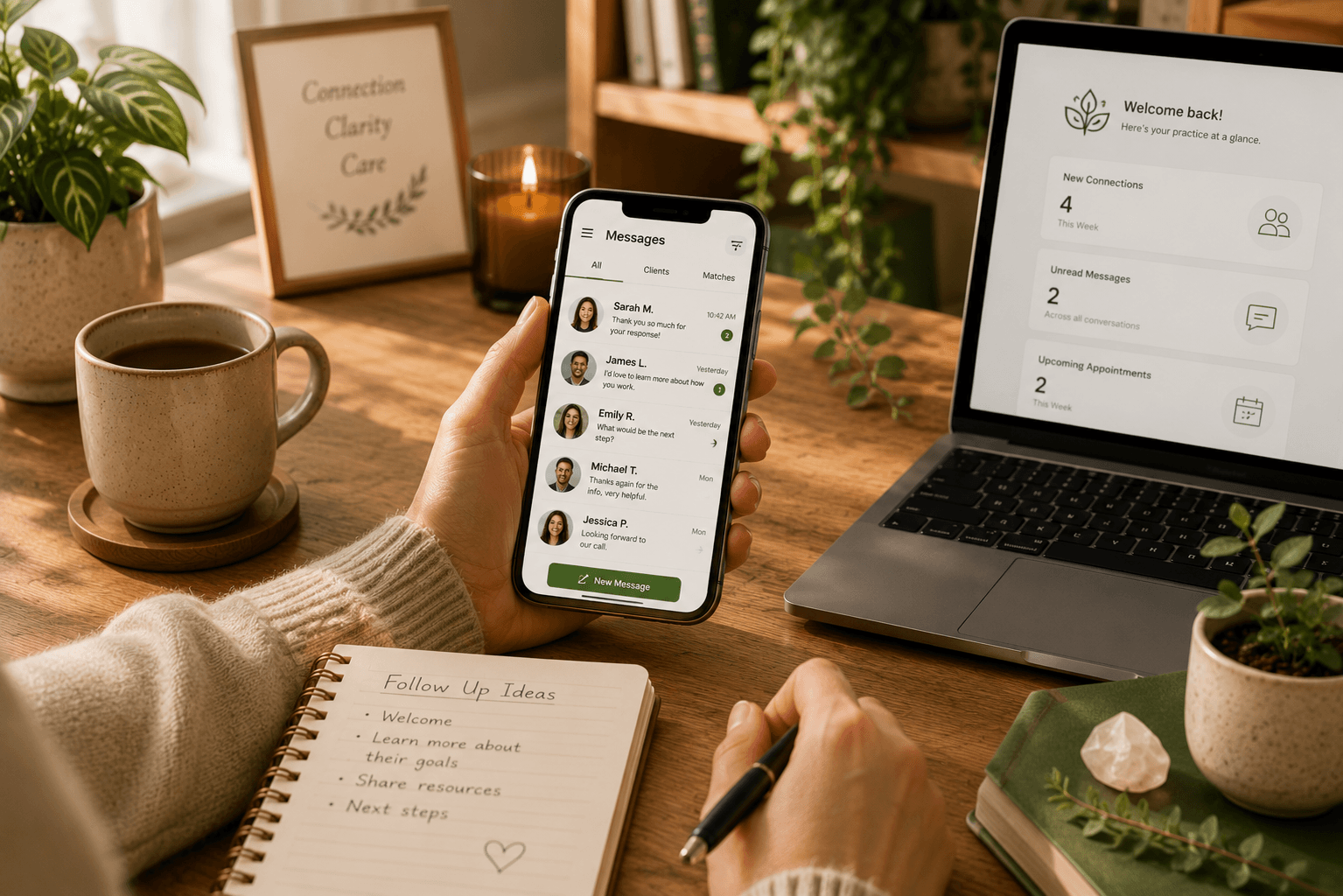
A strong first message usually includes a brief greeting, a note that shows you reviewed their request, a simple explanation of how you may be able to support them, and a clear next step.
- Use the client's name when available
- Acknowledge what they shared
- Keep your tone warm and professional
- Invite the next step without pressure
The goal is not to close the conversation immediately. The goal is to make it easy for the client to feel comfortable continuing.
Setting expectations early
Clear expectations help both you and the client understand what comes next. This can include how you typically begin working with new clients, what a first conversation may look like, how scheduling works, and whether there are any important boundaries or next steps they should know about.
Setting expectations early can reduce confusion and create a more professional experience. It also helps the client understand that your process is organized and intentional.
- Explain your usual next step
- Share how consultations or intro calls work
- Be clear about response times
- Let the client know what information may be helpful to share
When you're not the right fit
Not every connection will be the right fit, and that is okay. Sometimes the client needs a different specialty, a different type of support, a different schedule, or a practitioner with a different background.
Being honest about fit is part of creating a trustworthy client experience. If you do not feel aligned with the client's needs, respond with kindness and professionalism. You do not need to over-explain, but you should avoid making the client feel dismissed.
A respectful response may acknowledge their request, thank them for reaching out, and let them know that another practitioner may be better suited to support their goals.
Building long-term relationships
A strong client relationship is built over time. The first interaction matters, but consistency matters just as much. Clients are more likely to feel supported when your communication remains clear, timely, and aligned with the expectations you set early on.
Long-term trust often comes from simple habits: following up when you said you would, keeping your tone respectful, staying organized, and helping the client understand what each next step looks like.
Rooted Vitality helps create the connection, but the relationship is shaped by the care, professionalism, and communication you bring to each interaction.
Key Takeaways
- New connections should be reviewed thoughtfully before responding.
- A strong first message is warm, specific, and easy to respond to.
- Clear expectations help clients feel more confident moving forward.
- It is okay to recognize when a client is not the right fit for your practice.
- Long-term trust is built through consistent, respectful communication.